Stepper Motors
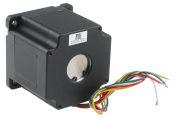
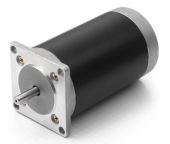
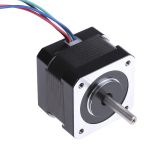
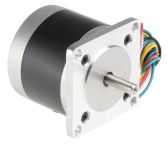
Stepper motors are DC motors that move in steps. Having computer-controlled stepping means you can get very precise positioning and speed control. As stepper motors have precise repeatable steps they are ideal for applications that require precise positioning. Normal DC motors don't have much torque at low speeds but a stepper motor features maximum torque at low speeds.
The mechanism of a stepper motor involves a rotor and a stator with a set of electromagnetic coils. By sequentially energising these coils, a control circuit directs the rotor to turn by a specific, fixed angular increment, known as a full step. Such a design allows the motor to be held at a specific position without power, making them highly reliable for static applications where a geared head is sometimes also used.
Engineers and designers in New Zealand use stepper motors for their ability to achieve precise, controlled motion in a wide variety of applications. They can perform movements with high speed or high torque as needed, often in a flat profile for compact designs.
For a comprehensive guide to Stepper Motors please see our guide
Types of Stepper Motors
Bipolar Stepper Motor
Bipolar Stepper Motors contains an onboard motor driver that uses an H-bridge circuit. The system reverses the current flow through the electromagnetic coils, energising them on command to turn a shaft in measured movements, which can also be reversed. Bipolar motors are generally better than unipolar motors, offering more high torque and improved efficiency.
Hybrid Stepper Motor
Hybrid Stepper Motors combine aspects of both permanent magnet (PM) and variable reluctance (VR) motors. They achieve more precision through half-stepping and micro-stepping, where the motor’s driver sends an alternating sine/cosine waveform to the coils. A hybrid stepping motor can also run in full step mode for faster operation.
Permanent Magnet Stepper Motor
A Permanent Magnet Stepper Motor has a rotor made from two permanent magnet rotors which are slightly offset from each other. It functions as an electromechanical energy conversion device, converting electrical energy to mechanical energy. Rotation is achieved by the magnetised rotor interacting with energised stator coils, causing the shaft to move in discrete steps. A geared head is often added for increased torque.
Benefits of Stepper Motors
Stepper motors are a versatile, reliable, and cost-effective way of controlling precise motor movements. They provide a unique combination of performance characteristics that make them ideal for a variety of applications and industries, including those in New Zealand.
- Precise Positioning: Stepper motors move in discrete, repeatable steps, enabling incredibly precise positioning and speed control. The motor’s ability to perform full steps or even smaller microsteps ensures accurate and controlled movement for applications requiring exact positioning.
- High Torque at Low Speeds: Unlike conventional DC motors, a stepping motor offers maximum high torque at low speeds. This is a significant advantage for applications requiring rapid acceleration and stopping without losing positional accuracy, making them great for robotics and CNC machines.
- Reliable and Long Lifespan: The brushless design of a stepper motor means there are fewer mechanical parts to wear out. Such a feature contributes to a long operational lifespan and reduces the need for maintenance, ensuring dependable performance over time.
- Versatility and Flexible Application: Stepper motors have a flexible application range. They can be used with a motor driver for simple 'set and forget' movements or complex, high-dexterity programmed motions. The adaptability makes them a popular choice for automation and motion control systems.
- High Speed Performance: While best known for their low-speed torque, some stepping motors can also achieve high speeds. When properly matched with an appropriate motor driver and control scheme, they can perform rapid, synchronised movements for applications needing fast transitions.
- Compact Design: Some stepper motors feature a flat profile. A flat design makes them suitable for use in thin-profile equipment or installations with limited space, providing a versatile solution for compact motion control systems.
Factors to Consider while Choosing the Right Stepper Motor
Selecting the correct stepper motor is important for ensuring optimal performance, longevity, and efficiency in your motion control system. Consider these factors to find the ideal motor for your project:
- Precision Needs: Determine the positional accuracy and resolution required. A stepping motor offers fixed steps, but with microstepping, a motor driver can increase resolution for finer movements.
- Torque Requirements: A stepper motor with high torque at low speeds is essential to overcome friction, accelerate the load, and hold the position firmly without losing steps.
- Voltage & Current Ratings: Ensure the motor’s voltage and current ratings are compatible with your motor driver and power supply. Mismatched ratings can lead to poor performance or damage the motor and drive.
- Size & Mounting Constraints: Consider the physical dimensions of the stepper motor. Some motors have a flat profile for space-saving installations, and others are geared for higher torque in compact designs.
- Wiring & Connectivity: Choose a motor with wiring (bipolar or unipolar) that is compatible with your motor driver. Bipolar motors generally offer more torque, while unipolar motors are simpler to wire.
- Driver Compatibility: The motor and motor driver must be compatible for proper control. A high speed motor requires a motor driver capable of handling the necessary current and voltage to maintain performance at higher speeds.
Industrial Applications of Stepper Motors
Stepper motors are indispensable for precise motion control across a wide range of industrial applications in New Zealand. They provide the accuracy and reliability needed to automate tasks in numerous sectors.
- 3D Printers: Stepper motors accurately position the print head and control filament extrusion in 3D printers, a growing industry in New Zealand for custom manufacturing and prototyping. They ensure layers are aligned precisely for high-quality finished products.
- CNC Machines: In CNC mills, lathes, and routers, stepping motors control the precise movement of cutting tools and workpieces. They are essential for accurate carving and shaping of materials, producing detailed parts for diverse industries.
- Camera Platforms: A stepper motor provides precise and repeatable positioning for camera platforms and pan-and-tilt mounts. Their ability to move in exact increments makes them ideal for surveillance systems or studio equipment where accuracy is required.
- Robotics: Stepper motors are used for precise joint articulation and end-effector positioning in industrial robots. They provide the necessary accuracy for tasks like welding, assembly, and pick-and-place applications, common in New Zealand manufacturing.
- Process Automation: Stepper motors enable accurate indexing, fluid dispensing, and component placement in automated assembly lines. Their dependable, repeatable motion ensures consistency and efficiency in production processes across a variety of industries.
Drive Precision with Stepper Motors from RS New Zealand
RS New Zealand is a trusted supplier and distributor of comprehensive stepping motor solutions. We offer a wide range of stepper motors and accessories sourced from reputable brands like Sanyo Denki, Schneider Electric, and RS PRO, ensuring reliable options for every application.
Beyond stepper motors, we also provide a wide array of other electric motors and components, such as AC motors, servo motors, and motor controllers, catering to all your motion control and automation requirements.
Explore our user-friendly online site for the full range of products and have them shipped to your door at your convenience. With our flexible delivery options, you can receive your products precisely when needed. For comprehensive details on delivery times and fees, please consult our Delivery page.
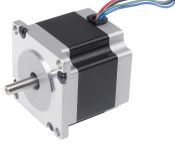
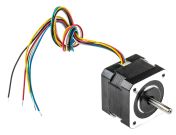
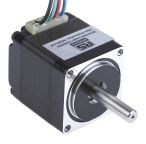
Popular Searches
Related links
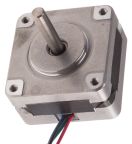
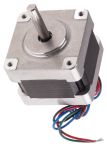
- RS PRO Hybrid 30mNm Torque 1.8° 4mm Shaft
- RS PRO Hybrid 60mNm Torque 1.8° 5mm Shaft
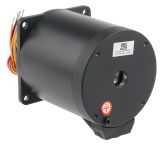
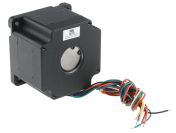
- RS PRO Hybrid 0.22Nm Torque 1.8° 5mm Shaft
- RS PRO Hybrid 1.89Nm Torque 1.8° 6.35mm Shaft
- RS PRO Hybrid 0.12Nm Torque 1.8° 5mm Shaft
- RS PRO Hybrid 0.44Nm Torque 1.8° 5mm Shaft
- RS PRO Hybrid 0.36Nm Torque 1.8° 5mm Shaft
- RS PRO Hybrid 65mNm Torque 1.8° 5mm Shaft