Busbars
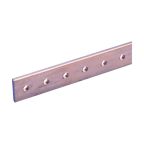
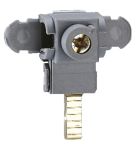
Busbars, also referred to as electrical busbars or power busbars, are essential conductive components used to distribute large amounts of electrical current within a system. These components are typically constructed from high-conductivity metals like copper or aluminium. Their primary function is to replace complex, expensive wiring by acting as a single, central point for collecting and distributing electric power safely and efficiently to multiple circuits, particularly within switchgear or a fuse board.
Types of Busbars
Busbars serve as an electrical junction, facilitating the efficient distribution of power from the incoming feed to multiple outgoing devices. Its physical configuration, material, and insulation determine its optimal application, with some of the most popular types of busbars including:
Copper Busbars
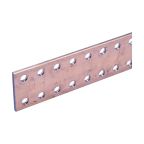
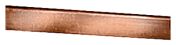
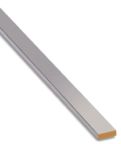
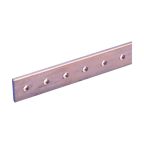
Copper busbars are the most common and effective type, primarily used for high-current applications due to copper's superior electrical conductivity. Their inherently robust nature makes them ideal for use inside industrial switchgear, control panels, and larger distribution boards. Additionally, their excellent thermal stability also makes them the preferred choice for connecting high-voltage equipment where reliable power transmission is critical.
Aluminium Busbars
Aluminium busbars provide a cost-effective and lightweight alternative to copper bus bars. While offering slightly lower conductivity, aluminium busbars are preferred in applications where weight reduction is a critical factor, such as large-scale power transmission systems and utility infrastructure. These durable busbars maintain strong performance and are widely employed in general electrical distribution systems where the current requirements are less demanding than in high-density industrial setups.
Flexible Busbars
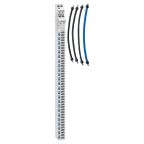
Flexible busbars are constructed from multiple thin copper strips or braided conductors, granting them the ability to bend, flex, and absorb vibration. This design makes them essential for applications where movement between components is unavoidable, such as in electric vehicles, mobile machinery, or where connections need to navigate tight, awkward angles. Their flexibility ensures reliable power transmission without the risk of metal fatigue associated with rigid bus bars.
Insulated Busbars
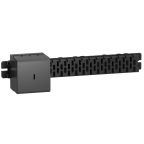
Insulated busbars feature an external covering or coating, typically made from durable materials like PVC (Polyvinyl Chloride) or epoxy resin. The primary role of this insulation is to provide essential electrical separation from the live busbar, protecting users and ensuring critical machine safety. This added measure makes them important components, commonly used in densely packed environments such as industrial switchgear, compact panel boards, and situations requiring waterproof solutions.
Comb Busbars
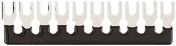
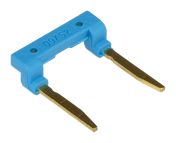
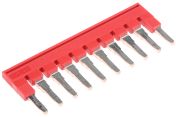
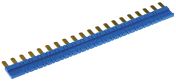
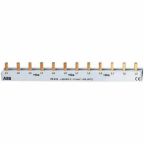
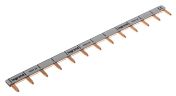
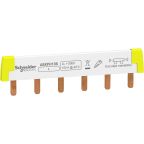
Comb busbars are a common, highly efficient type of connecting busbar designed primarily to simplify wiring in smaller electrical enclosures. Characterised by their distinct, comb-like shape, they are typically found in consumer units and small distribution boards. They are used to quickly and neatly distribute power from the main switch to multiple devices, such as MCBs, dramatically reducing the complexity and number of individual wiring connections required within the fuse board.
Key Functions and Benefits of Busbars
Busbars are fundamentally responsible for concentrating and dividing electrical power across a distribution system while ensuring operational integrity. Some of its key benefits include:
- Lower Losses/Better Conduction: High-conductivity materials like copper result in lower electrical resistance compared to traditional wiring, significantly reducing energy losses and improving overall system efficiency.
- Modular Layouts in Switchgear: Using a rigid power busbar allows for clean, standardised mounting of components (like circuit breakers), creating modular, space-saving layouts that are easier to design and scale.
- Flexibility (Structural): Specialised flexible busbars (e.g., braided copper) can absorb vibration and simplify connections between components that are not perfectly aligned, minimising mechanical stress on terminals.
- Easier Installation and Maintenance: The standardised and clear layout of a busbar installation significantly reduces setup time. This simplification also makes future troubleshooting and component replacement much faster than managing complex cabling.
Factors to Consider When Choosing the Busbars
Here’s what to keep in mind when selecting the right busbar for your needs:
- Current Carrying Capacity: The chosen busbar must be physically sized and rated to safely handle the maximum power or electrical current it’s expected to carry without overheating.
- Material: The choice of material hinges primarily on cost, weight, and conductivity, such as choosing between the highly conductive but heavier copper busbar or the lighter, more cost-effective aluminium alternative.
- Spacing and Compatibility: Ensure the busbar's dimensions and terminal arrangement are compatible with the specific switchgear, circuit breakers, and enclosures being used for the installation.
- Insulation: Evaluate the need for a protective coating; insulated busbars are essential in compact or high-voltage assemblies to prevent accidental short circuits or contact hazards.
- Flexibility: For applications involving movement, vibration, or misaligned components, opt for flexible busbars to prevent mechanical stress and to ensure reliable long-term connection integrity.
- Thermal and Loss Considerations: The material and design of the electrical busbar directly impacts heat generation; selecting the right type minimises power losses and reduces the risk of thermal damage.
- Ease of Installation: Look for designs, such as pre-cut comb busbars or modular systems, that simplify the wiring process and that reduces the overall time required for assembly.
- Space and Mounting Constraints: The physical size and shape (flat strip, solid bar, or phase bar) must fit within the enclosure's volume, taking into account clearances and mounting hardware requirements.
Applications of Electrical Busbars
Electrical busbars are indispensable components used across a number of industries and applications, such as:
- Inside Switchgear Panels: Busbars are used as the main internal conductors to safely manage and distribute high voltages and currents received by the switchgear, before routing power to transformers or main feeders.
- Control Cubicles: In industrial automation, smaller copper busbars are essential for distributing low-voltage power reliably to PLCs, contactors, and control components housed within the cubicles.
- Power Distribution in Industrial/Commercial Installations: Large, multi-phase busbars (including the 3-phase busbar) are used to distribute massive amounts of power efficiently across factory floors and commercial complexes.
- Modular Distribution Boards: Comb busbars simplify the rapid connection of modular protection devices (MCBs and RCBOs) within consumer units and smaller sub-distribution panels.
- Busbar inverters/Solar/PV Systems: Power busbars are crucial for efficiently collecting high DC currents generated by multiple solar panels and routing them to the inverter with minimal loss.
- Railway, Automotive, Heavy Machinery Applications: Flexible busbars are essential here, providing robust, vibration-resistant electrical connections in environments where components are subject to constant movement or high mechanical stress.
Find the Perfect Busbar For Your Needs At RS New Zealand
Acquiring your busbars from RS New Zealand’s digital platform is a straightforward and dependable process. Our extensive online catalogue offers a wide selection of top-quality busbar solutions, as well as related products such as terminal blocks and current transformers, from leading brands such as ABB and Schneider Electric. Once you've selected your preferred products, simply proceed to checkout via any of our convenient online payment options.
When you purchase your busbar solutions from us, you're investing in quality assurance and expert technical support. This, coupled with our competitive prices, ensures you get the best value without compromising on durability or performance.
Our efficient delivery services also ensure the swift, nationwide doorstep delivery of your products across New Zealand. For complete specifics on dispatch timelines, applicable charges, and available shipping choices, kindly consult our dedicated Delivery Page today.