Timing Belts
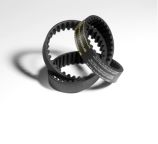
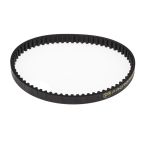
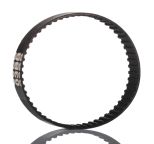
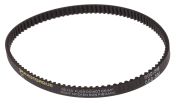
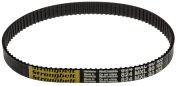
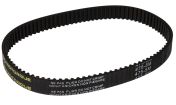
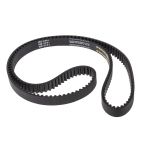
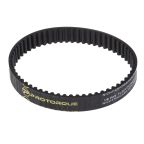
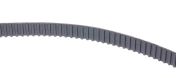
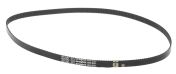
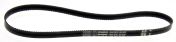
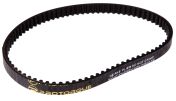
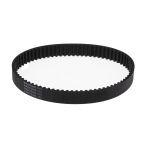
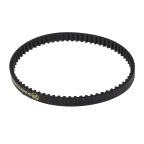
Timing belts are essential toothed belts used in power transmission systems, including drive motors and spindles, to ensure precise rotational alignment. Often referred to as a timing chain belt (though distinct in design), these critical components play a vital role in applications like internal combustion engines, precisely synchronising crankshaft and camshaft rotation.
To meet these exact demands, RS New Zealand offers a comprehensive range of timing belts, including high-quality options like Gates timing belts, for all your power transmission needs.
Types of Timing Belts
Timing belts are manufactured from various materials, with rubber being an industry-standard choice due to its flexibility, elasticity and durability under tension. These materials are selected based on their intended application, ensuring optimal performance and longevity. The most common types of timing belts include:
Single-sided Timing Belts
These are one of the most used types of timing belts, featuring teeth on only one side. They are widely used in a variety of applications where power needs to be transmitted from one pulley to another, such as printers or automated machinery, ensuring precise synchronisation and efficient drive.
Double-sided Timing Belts
Double-sided timing belts are designed with teeth on both sides of the belt, allowing them to drive multiple shafts or operate in serpentine configurations such as textile machinery or packaging equipment. This unique design enables power transmission from both sides, increasing versatility in complex drive systems and maximising space efficiency.
Polyurethane Timing Belts
Polyurethane timing belts offer superior strength, precision and wear resistance, making them ideal for specialised applications such as food processing or cleanroom environments. They provide dimensional stability and often excel where cleanliness is crucial, unlike traditional rubber options.
Tooth Profiles
The tooth profile of a timing belt is critical for efficient and accurate power transmission in a drive system. Different profiles, such as trapezoidal or curvilinear, dictate the belt’s engagement with pulleys, influencing torque capacity and precision, particularly in applications like CNC machines or linear positioning systems.
Key Considerations When Choosing Timing Belts
Choosing the right timing belt is crucial for optimal power transmission and longevity. Consider these key factors to ensure an informed selection:
- Profile: The timing belt’s tooth profile is critical for efficient and accurate engagement with pulleys. Different profiles are designed for specific torque capacities and precision requirements, influencing the belt’s performance in various drive systems.
- Pitch: The pitch — or the distance between the centres of two adjacent teeth — must precisely match the mating pulleys. An accurate pitch ensures proper tooth engagement, preventing slippage and promoting smooth, synchronised motion within the system.
- Length and Width: The length and width of the timing belt are vital for correct fitting and optimal power transmission. Incorrect dimensions can lead to improper tension, premature wear or system failure, directly impacting operational efficiency.
- Material: Timing belts are manufactured from various materials like rubber or polyurethane, each offering distinct properties. Material choice impacts flexibility, elasticity, durability and resistance to environmental factors such as heat, oil or chemicals.
- Standards to Look For: Always confirm that your timing belt adheres to relevant international standards, such as ISO 5296 or DIN 7721. Compliance ensures consistent quality, performance and compatibility across different drive components and systems.
Do Timing Belts Need Replacing?
Yes, timing belt replacements are a crucial maintenance requirement. The rubber compounds in timing belts naturally degrade over time from heat and oil exposure, necessitating regular replacement. This ensures optimum performance and prevents unexpected failures of the cambelt or the entire drive system.
Applications of Timing Belts
There are a wide range of industrial applications where timing belts and cambelts are used daily in different products and processes. These include:
- Office Machinery: Timing belts are crucial in office equipment like printers and copiers for precise paper handling and the synchronised movement of internal components, ensuring reliable operation.
- Conveyor Systems: For conveyor belts, timing belts ensure accurate material positioning and transport. They are essential where synchronised or incremental movement of goods is required, optimising logistics and assembly lines.
- Electronic Data Processing Equipment (EDP): In EDP equipment, timing belts facilitate the precise movement of internal mechanisms for data handling and processing. This ensures the reliable and accurate operation of computing and storage systems.
- Textile Machinery: Timing belts are widely used in textile machinery for synchronised movements of looms, knitting machines and other components. They enable precise fabric production and efficient material processing.
- Wood Processing Machinery: In wood processing, timing belts provide accurate power transmission for saws, routers and other cutting tools. They ensure precise cuts and efficient material shaping in demanding environments.
- Machine Tools: Timing belts are fundamental in machine tools like lathes and milling machines for precise axis positioning and synchronised motion. This is critical for achieving high manufacturing accuracy.
- Compressors: Timing belts help synchronise the internal components of various compressors, ensuring efficient air compression and reliable operation. This is vital across diverse industrial systems.
- Printing Machinery: In printing presses, timing belts provide precise paper registration and ink roller synchronisation. This ensures high-quality output, accurate colour alignment and efficient production.
- Hydraulic Gear Pumps: Timing belts are sometimes employed in hydraulic gear pumps to synchronise internal gears. They ensure smooth fluid displacement and efficient generation of hydraulic power in relevant systems.
- Building Machinery: Various types of building machinery integrate timing belts for reliable power transmission and synchronised movement. These are crucial for construction tasks, ensuring equipment operates effectively on site.
Your Trusted Timing Belt Supplier and Manufacturer in New Zealand
RS New Zealand is your trusted manufacturer, supplier and distributor of high-quality timing belts across New Zealand. Our extensive selection delivers exceptional value, featuring versatile timing belts — as well as associated products such as safety gloves and tachometers — from leading manufacturers like Gates, Contitech and OPTIBELT. All our products are also backed by our commitment to product quality, rigorous testing and compliance to international standards.
For ultimate convenience, RS New Zealand ensures the swift, nationwide doorstep delivery of your products throughout the country. For comprehensive details on dispatch timelines, applicable charges and various shipping choices, please consult our dedicated Delivery Information page today.