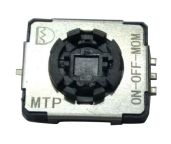
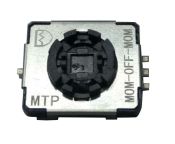
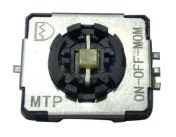
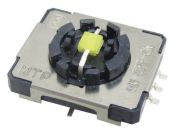
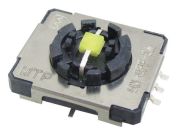
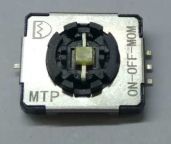
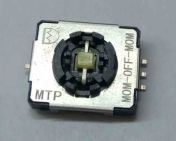
Rotary Switches
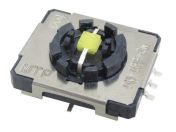
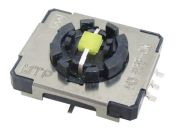
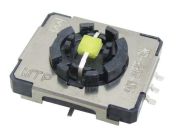
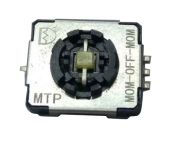
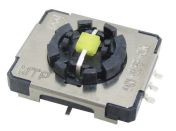
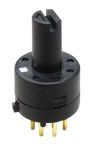
A rotary switch is an electromechanical component that uses rotational switch movement to connect and disconnect electrical circuits, often providing multiple switching positions from a single point of control. Internally, a spindle or rotor with a contact arm moves over a series of fixed contacts, allowing a user to select different circuits or functions. A rotary switch is commonly used in applications across New Zealand (NZ) for selecting voltage ranges on a power supply or choosing operational modes on machinery.
Types of Rotary Switches
Rotary switches come in different types each optimised for specific electrical loads, environmental conditions, and mounting requirements.
Wafer Switches
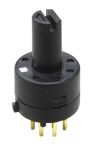
Wafer switches are the most common type of rotary switch, built from stacked, circular insulating plates (wafers) containing fixed contacts. This design efficiently accommodates multiple poles and decks, making it versatile for complex circuit selection where configurations like a 3 position rotary switch or a 5 position rotary switch are required.
Yaxley Switches
Also known for their robustness and high-quality indexing mechanism, Yaxley switches are a variation of the wafer type, often featuring gold-plated contacts for low-level signal integrity. They are frequently used in precision instrumentation and test equipment where reliable, repeatable contact resistance is necessary.
Rotary Cam Switches
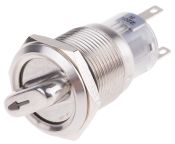
Rotary cam switches are heavy-duty, robust devices primarily used as a rotary power switch for motor control, switching loads, and isolating circuits in industrial environments. They feature distinct, snap-action switching achieved by cams pushing contacts, providing excellent make/break capability and typically offering configurations like a 2 position rotary switch (On/Off) or rotational multi-step selectors.
Miniature Rotary Switches
These rotary switches are characterised by their small physical size, making them ideal for space-constrained applications, particularly in portable electronics and dense control panels.
PCB Mount Rotary Switches
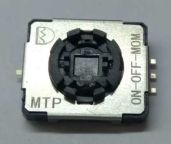
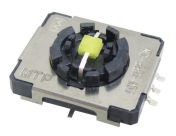
Designed for direct integration onto printed circuit boards, these switches minimise wiring and streamline assembly processes. They are available in various styles (through-hole or surface-mount) and are typically used for low-current signal routing.
Rotary DIP Switches
A variation on the standard rotary switch, the rotary DIP (Dual In-line Package) switch provides an encoded output, such as BCD (Binary Coded Decimal), rather than simply connecting two points. This allows the user to select a number or code with the rotational switch, making them essential for setting device addresses or configuration parameters in digital systems.
Key Benefits of Rotary Switches
Rotary switches are a preferred component in B2B applications due to their inherent mechanical advantages and reliable electrical performance over simpler switching mechanisms.
- Precision and Repeatability: The distinct detent mechanism of a rotational switch ensures that each position is accurately selected and maintained, which is critical for applications like instrument range selection or setting machine parameters. This provides repeatable electrical contact and eliminates ambiguity in selection.
- High Current and Voltage Capability: Designs such as the rotary power switch or rotary cam switch are engineered with robust contacts and arc-suppression features, allowing them to safely handle high electrical loads in industrial and heavy-duty equipment.
- Versatility in Configuration: The multi-deck and multi-pole design allows a single rotary switch to control numerous independent circuits simultaneously, offering complex selection options like a 5 position rotary switch or a 3 position rotary switch within a compact footprint.
- Enhanced Durability and Lifespan: Constructed with robust materials and featuring a controlled mechanical action, quality rotary switches have a high operational lifespan, often rated for tens of thousands of cycles.
Factors to Consider When Choosing Rotational Switches
Selecting the appropriate rotary switch requires careful consideration of the electrical, mechanical, and environmental specifications of the application to ensure optimised performance and compliance.
- Number of Positions and Throw: Determine the exact number of discrete selections required (e.g., 2 position rotary switch, 3 position rotary switch). This corresponds to the index angles and the 'throw' (number of outputs) of the switch, which directly impacts circuit design complexity.
- Electrical Ratings (Current and Voltage): The switch must be rated to safely handle the maximum continuous current and peak voltage of the circuit, especially when used as a rotary power switch. Underrated contacts can lead to arcing, premature failure, or safety hazards.
- Poles and Decks: Specify the number of independent circuits (poles) the switch needs to control and the number of contact layers (decks) required to achieve the desired switching logic.
- Indexing Angle and Torque: The angle between detents and the required rotational force (torque) affect user experience and control panel design. A higher torque prevents accidental switching in vibration-prone environments.
- Contact Material and Plating: For low-level signal switching (e.g., test equipment), gold-plated contacts are preferred for their low contact resistance and excellent reliability, while silver-alloy contacts are typically used for high-current applications.
Applications of Rotary Switches
The inherent reliability and precise selection capabilities of the rotary switch make it indispensable across a multitude of industrial and commercial sectors.
- Test and Measurement Equipment: Used extensively in multimeters, oscilloscopes, and signal generators for accurate range and function selection. The precise indexing ensures repeatable and unambiguous settings necessary for calibrated measurement.
- Industrial Machine Control Panels: Rotary switches are typically used on machine control panels as mode selectors (e.g., Manual/On/Off/Auto, Speed 1/Speed 2).
- HVAC and Climate Control Systems: Employed in commercial and industrial heating, ventilation, and air conditioning units for selecting fan speeds, operational modes, and temperature zones.
- Power Supplies and Distribution: High-current models function as main circuit isolators or selectors for various output voltages and phases, acting as a reliable rotary power switch in equipment like welders or generators.
- Audio/Visual Mixing Consoles: Utilised for selecting input channels, gain settings, and filter characteristics in professional broadcasting and recording equipment.
Order High Quality Rotary Switches from RS
RS is a trusted supplier and distributor of high-quality rotary switches in New Zealand (NZ) stocking essential lines from industry-leading manufacturers such as Nidec Components, Lorlin, TE Connectivity and more.
Besides our comprehensive range of rotary switches, including everything from a simple on off rotary switch to complex multi-deck selectors, RS also offers complementary products like proximity sensors and limit switches to complete your industrial and electronic projects.
View our extensive catalogue today and visit our delivery page for comprehensive information on delivery options and fees.