Sound Level Meters
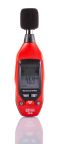
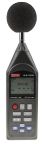
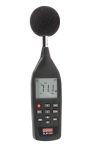
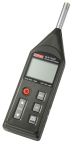
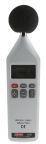
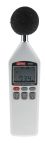
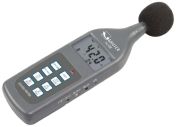
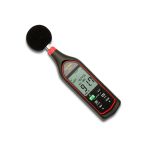
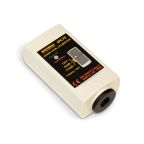
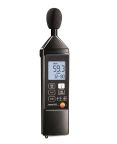
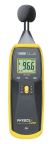
Sound level meters are handheld electronic devices that take acoustic measurements. They provide readings on the noise level in an environment and usually return a measurement in decibels (dB). Sound level meters are also called decibel meters or noise meters and they are used to measure decibels.
Most sound level meters feature an integrated digital display and some have an inbuilt datalogging memory to store readings. Many models can be attached to a smartphone or tablet and the data easily shared. Some models need connecting to a computer to export data.
Types of Sound Level Meters
Class 1 (Type 1)
Class 1 sound level meters, also known as Type 1 meters, are highly precise instruments designed to meet strict international standards. They are commonly used in laboratories, environmental monitoring, and compliance testing where accurate noise measurement is critical.
Class 2 (Type 2)
Class 2 or Type 2 sound meters are suitable for general-purpose applications such as workplace noise assessments, health and safety monitoring, and industrial noise measurement. While less precise than Class 1, they provide reliable readings for occupational and environmental noise control.
Integrating Meters
Integrating sound level meters measure varying noise levels over time and calculate the average sound exposure. They are widely used in environments with fluctuating noise, ensuring compliance with workplace noise regulations.
Dosimeters
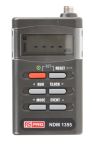
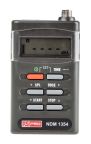
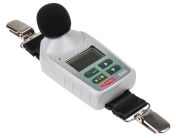
Noise dosimeters are wearable devices that measure an individual’s personal sound exposure throughout a working day. They are essential for occupational health and safety, helping employers assess risks and comply with noise exposure limits.
Key Features to Consider When Choosing Sound Level Meters
When selecting a sound level meter, it’s important to evaluate its technical features and functionality to ensure accurate noise measurement, compliance, and ease of use. Key factors include:
- Frequency Weighting: Refers to filters like A-weighting (dBA), C-weighting (dBC), and Z-weighting (dBZ), which adjust measurements to reflect human hearing sensitivity or capture linear/unweighted sound. A-weighting is most common for general noise and hearing assessments.
- Time Weighting: Determines how quickly the meter responds to sound fluctuations. Common modes are Fast (125 ms), Slow (1 s), and Impulse, each suited to different noise environments.
- Measurement Range: Indicates the span that the meter can accurately record. A broader range is beneficial for capturing both quiet and loud sound levels effectively.
- Data Logging: If you want to access previous recordings, look for a sound meter with internal memory that logs reading.
- Connectivity: Features like USB, Bluetooth, Wi-Fi, or SD card support enable easy data transfer to external devices or apps for analysis, reporting, and remote control.
- Calibration: Regular calibration, either with built-in mechanisms or external acoustic calibrators, is crucial for ensuring measurement accuracy and maintaining traceability to standards.
Applications of Sound Decibel Meter
Sound decibel meters or sound level meters are versatile instruments vital across multiple sectors for accurate noise measurement and compliance. Key applications include:
- Workplace Noise Monitoring: These meters are used to assess occupational noise exposure, ensuring worker safety and compliance with regulations.
- Environmental Noise Assessment: They are employed in urban and natural settings to monitor noise pollution from traffic, industry, or public events, aiding in environmental studies and regulatory enforcement.
- Product Testing: Sound meters are integral to testing machinery, appliances, and vehicles for noise emissions, helping manufacturers design quieter and regulation-compliant products.
- Building Acoustics: They are used to evaluating reverberation, sound insulation, and intelligibility in architectural spaces like offices, homes, and auditoria.
- Health and Safety Compliance: Sound meters support noise surveys, personal exposure assessments, and noise control programs to prevent hearing loss and meet workplace safety requirements.
Measure Sound Levels with Precision
RS as a trusted supplier and distributor in New Zealand, offers sound level meters from leading brands like Castle, Martindale, and Casella Cel. Shop online now with RS to get dependable products backed by expert support and fast delivery across NZ. We offer reliable next-day delivery for sound meters and other meters like multimeters, flow meters and more across New Zealand. For more info on our delivery options and fees, refer to our delivery information page.
Frequently Asked Questions About Sound Meters
What is weighting?
Weighting refers to the frequency range that is measured. Some sound meters will only measure one frequency range, while other models can measure across multiple ranges. Human hearing typically spans 20 Hz to 20 kHz, but sound meters adjust by cutting the extreme low and high ends to reflect what the ear perceives. A-weighting is most commonly used to approximate human hearing, C-weighting measures higher noise levels within the audible range, and Z-weighting provides a flat response, covering the full 10 Hz to 20 kHz spectrum at ±1.5 dB accuracy.
Should I calibrate my sound level meter?
Considering a calibration service your sound level meter will ensure that it always returns the most accurate measurements. It provides you with absolute confidence that your instrument works as expected with the highest accuracy.
Why would I use a sound level meter?
Sound level meters will give you measurements on the level of noise within an environment. High noise levels can damage hearing, cause hearing loss and can have a detrimental effect on health. With a reading from a sound meter, you can make sure that you have the correct measures in place (such as slowing down machinery to minimise excess noise) and appropriate PPE (Personal Protective Equipment) to minimise risk.
Popular Searches
Related links
- StarTech.com Sound Level Meter, 30dB to 130dB
- Martindale SP79 Sound Level Meter 8kHz max
- RS PRO RS-95 Sound Level Meter 8kHz max
- Sauter SU 130 Sound Level Meter, 30 dB to 130 dB
- RS PRO SLM52N Sound Level Meter 8kHz max
- Extech SL510 Sound Level Meter, 35dB to 130dB
- Martindale SPL82 Sound Level Meter 8kHz max
- RS PRO NDM1354 Sound Level Meter, 10kHz max