- Published 20 Mar 2024
- Last Modified 29 May 2025
- 7 min
A Complete Guide to Anemometers

Anemometers are versatile tools with various applications across New Zealand, from weather forecasting and environmental monitoring to industrial safety. In this guide, we'll explore what anemometers are, their different types, how they work to measure wind speed, and more.
What is an anemometer?
An anemometer, also known as a wind speed meter, is a crucial instrument for measuring wind speed, air pressure and air velocity. They work by converting wind energy into a measurable quantity, such as the rotation of cups or vanes, or the change in electrical current or sound waves. This measurement is then displayed or recorded to provide information about wind speed and direction.
The first anemometers were invented hundreds of years ago to roughly measure wind, while today they’re highly accurate monitors which can provide a variety of data. They’re available in manual and digital forms, and can be used to measure both the speed and velocity of gases in a contained flow, as well as in unconfined flows, such as atmospheric wind.
Did you know? The word ‘anemometer’ comes from the Greek word for wind, which is ‘anemos’.
Why was this device invented?
Anemometers have been around for hundreds of years, with the first model created by Italian architect Leon Battista Alberti in 1450 to measure wind velocity.
Alberti's anemometer featured a disk placed perpendicular to the wind, which would rotate from the force of the wind and incline as the wind moved.
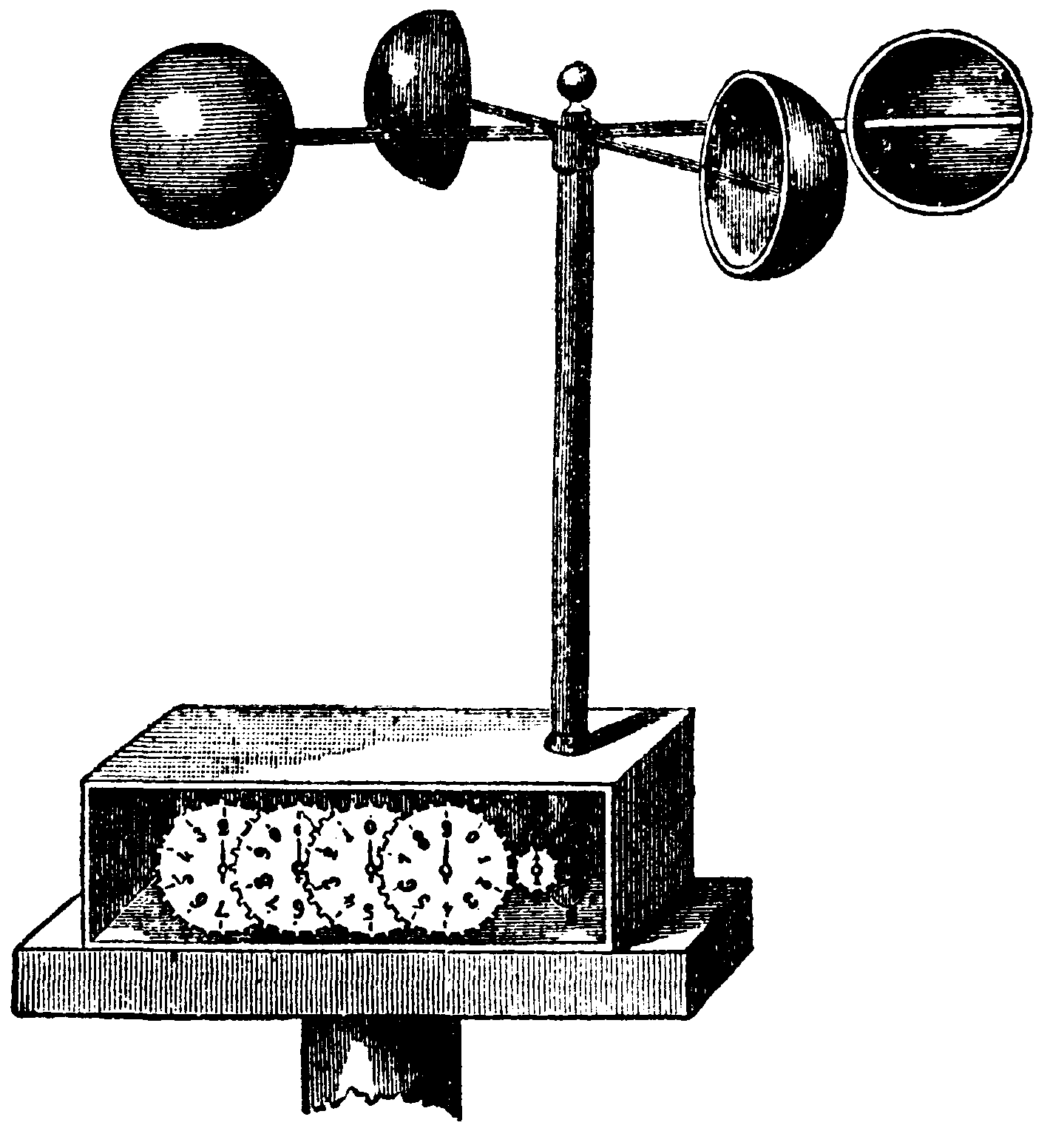
This initial design from the 15th century was then reinvented by astronomer and physicist John Thomas Romney Robinson in 1846. Robinson’s model was the prototype for the modern-day version, featuring a vertical spindle with four arms. Cups were then attached to each of these arms, and when the wind blew the cups captured it, which caused the spindle to rotate to show the wind speed.
What Are Anemometers Used For and Why Are They Important?
Anemometers are vital instruments that provide crucial information about wind speed and direction.
Their applications are diverse, ranging from monitoring the safety of tall structures and controlling wind turbines to aiding in navigation and weather forecasting. In New Zealand, NIWA and MetService rely on anemometers to monitor wind patterns, predict weather changes, and issue severe weather warnings, keeping Kiwis informed and safe.
Wind speed is a key indicator of weather patterns, providing valuable insights into approaching storms and other meteorological events. This data is essential for various professionals, including pilots, engineers, and climatologists. Anemometers are also crucial for physicists studying the dynamics of air movement.
Furthermore, large wind turbines, like those found in many parts of New Zealand, often have built-in anemometers. These sensors measure wind speed and can activate braking systems to prevent damage during excessively strong winds.
Other uses of anemometers:
- Recreation and Safety: Sailors and windsurfers utilise anemometers to gauge wind conditions for optimal performance and safety, while those paragliding or flying drones can check for safe weather conditions.
- Environmental Monitoring: Scientists rely on anemometers to monitor environmental conditions, such as air quality and pollution dispersal in urban areas like Auckland and Wellington.
- HVAC Systems: Anemometers provide precise airflow measurements for HVAC installation and repair, ensuring that different components such as the axial fans or fan mesh are working efficiently.
- Construction Safety: Monitoring cranes in construction work is crucial, especially in windy cities like Wellington, where anemometers help assess wind conditions and prevent risks to staff and equipment
- Event Management: Event organisers use anemometers to monitor weather conditions and ensure the safety of temporary structures, particularly in coastal areas with strong winds.
- Aviation Safety: Since weather forecasts don’t provide live data, anemometers are useful for monitor airfields and airports to reduce risk to planes flying at low altitude during take-off and landing.
The Different Types of Anemometers and How They Measure Wind Speed

Hot-wire Anemometers
Also known as thermal anemometers, hot-wire anemometers measure wind speed by determining how quickly a heated wire cools down due to airflow. They are highly sensitive and accurate, making them ideal for measuring low wind speeds and turbulent flows. Hot-wire anemometers are often used in research and laboratory settings, as well as in HVAC systems for precise airflow measurement.

Vane Anemometer
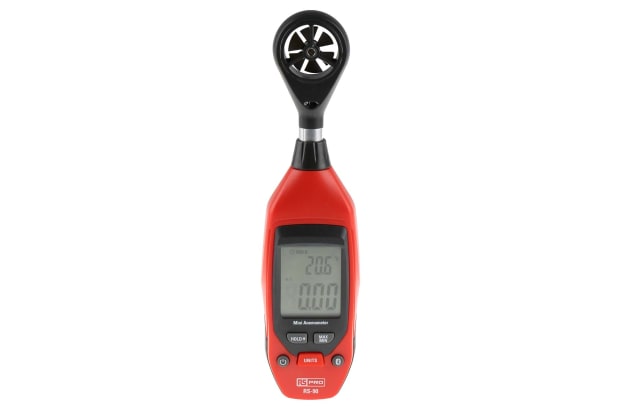
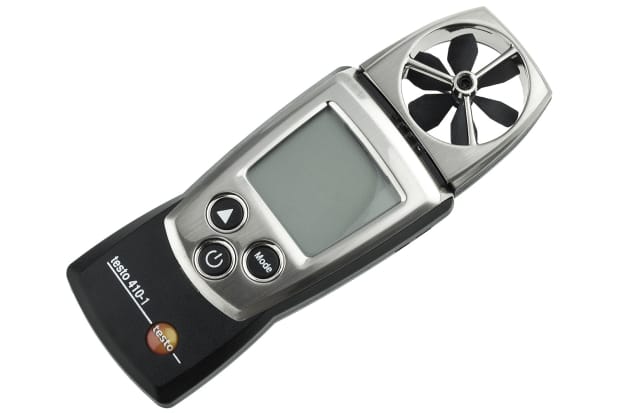
Vane Anemometers, also referred to as propeller or windmill anemometers, as they resemble a small windmill with blades that rotate when exposed to wind, measure wind speed by counting the number of spins per second, with the results displayed on the digital display.
These anemometers are commonly used in weather stations, aviation, and environmental monitoring due to their durability and ability to measure a wide range of wind speeds.
Cup
These are the simplest type and among the most accurate.
They feature a set of either two, three or four cups which spin on a mounted pole by the wind.
As wind levels pick up, the cups spin faster, with the instrument capturing the speed of the wind which is then shown on a digital display.
They’re mostly designed to be mounted on structures such as buildings or sailboats, but some handheld models are available.
Sonic
Invented in 1994 by geologist Dr Andreas Pflitsch, these devices determine instantaneous wind speed and air velocity by measuring the sound waves travelling between a pair of transducers.
An ultrasonic anemometer doesn’t have any moving parts and uses sensors to detect even small changes in the wind. They typically feature four sensors arranged in a square.
What Is the Unit of Measurement for an Anemometer?
The most common unit of measurement for wind speed is metres per second (m/s). However, anemometers can often display wind speed in other units, such as kilometres per hour (km/h), miles per hour (mph), knots, or feet per minute (ft/min).
How to Use Anemometer to Measure Wind Speed
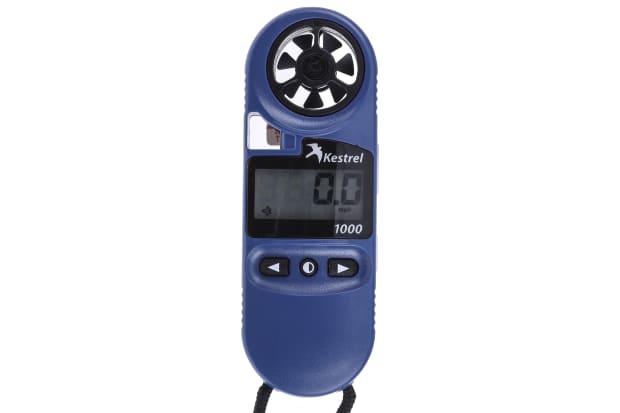
How to Use A Digital Anemometer
Digital anemometers are user-friendly and provide accurate wind speed readings with minimal effort. Here’s how you can use them:
- Select Units: Choose the desired unit of measurement for wind speed, such as metres per second (m/s), kilometres per hour (km/h), or miles per hour (mph).
- Position the Anemometer: Hold the anemometer in the wind, ensuring the sensor faces directly into the wind flow.
- Read the Display: The wind speed will be displayed on the digital screen. Note that the reading may fluctuate with wind gusts, providing a dynamic measurement of wind conditions.
Digital anemometers are widely used across various industries and outdoor activities due to their ease of use, accuracy, and convenient digital display.
How to Use A Manual Anemometer (Cup Anemometer)
Manual anemometers, typically featuring four cups arranged at 90-degree angles, require a slightly different approach to measure wind speed compared to digital models. Here's a step-by-step guide on how to use a manual anemometer:
- Mark a Reference Cup: Choose one cup on the anemometer as a reference point for counting rotations.
- Count Rotations: Hold the anemometer in the wind and count the number of times the marked cup completes a full rotation in one minute.
- Record and Repeat: Record the number of rotations on a piece of paper. Repeat this process four times to gather enough data for calculating an average.
- Calculate Average: Add up the four recorded numbers and divide the sum by four to determine the average number of rotations per minute. This average represents the wind speed.
While manual anemometers require some calculation, they provide a reliable way to measure wind speed without relying on electronic components.
How accurate is an anemometer?
Accuracy is an important quality of an anemometer. A high-quality device will provide a wind speed reading accurate to approximately ±0.5 m/s (±2km/h or ±1mph).
It’s important to remember that environmental wind speed isn’t constant, as it’s changing all the time. When monitoring a wind tunnel, the speed will be constant and precise measurements can be counted, however when outside any measurement is going to be a rough guide.
For a range of alternative products for gas and air measurement, click here.
How to calibrate an anemometer?
To make sure anemometers are reliable and precise, they should be regularly calibrated.
This is the procedure of checking the accuracy of a measuring instrument – as well as the adjustment to align it with the standard. The process allows equipment to produce more accurate results than would’ve otherwise been possible.
It’s vital to regularly calibrate devices, as their accuracy will reduce over time and with use. The permitted frame of calibration error is 5% – with any error beyond that potentially affecting the performance of the tool quite seriously, which could lead to liability for product failure.