Strain Gauges
A strain gauge is a type of pressure sensor that measures strain, the amount of deformation or displacement a material experiences when subjected to stress. By detecting even the smallest changes in length, strain gauges convert mechanical force into measurable electrical signals. This makes them essential for testing, monitoring, and controlling applications across engineering, construction, research, and manufacturing.
How Do Strain Gauges Work?
Strain gauges work by measuring the strain or force of an item and converting it into a change in electrical resistance. When force, pressure, tension, or weight is applied, both the material and the attached strain gauge deform. This deformation alters the gauge’s resistance, which can then be accurately measured. The sensitivity of this change is defined by the ‘gauge factor’.
Types of Strain Gauges
Some of the common types of strain gauges in New Zealand are:
General Purpose Precision Strain Gauges
General-purpose precision strain gauges are versatile constantan foil gauges used across scientific, industrial, and experimental stress analysis applications. They are available in a wide variety of patterns and geometries, making them suitable for equipment monitoring, research, and engineering projects. Each gauge is supplied with detailed dimensions in both metric (mm) and imperial (inches) units, along with clearly defined part numbers for easy selection.
Transducer-Quality Strain Gauges
Transducer-quality strain gauges are designed for manufacturers building transducers or other high-precision sensing devices. They feature tighter tolerances on carrier trim dimensions, enabling precise alignment and consistent nominal resistance values for accuracy.
These strain gauges also come with creep-adjusted designs to meet specific transducer requirements.
Karma Strain Gauges
Karma strain gauges are made from a nickel-chromium alloy, providing excellent stability and performance in both static and dynamic applications. These types of strain gauges are especially well-suited for high-temperature environments, long-term static strain measurements, and fatigue-rated transducer designs.
Bonded Foil Strain Gauges
Bonded foil strain gauges are the most widely used type, developed from the original metallic wire strain gauge design in 1938. They consist of a grid of wire filament that acts as a resistor, bonded directly to the test surface using epoxy resin. It works when a load is applied and the foil grid deforms with the surface, producing a measurable change in electrical resistance that is directly proportional to the strain.
What are Load Cells?
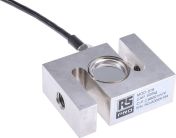
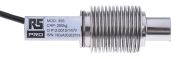
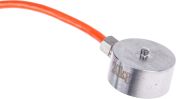
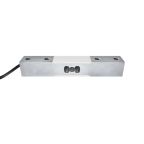
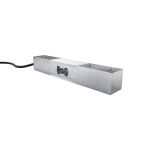
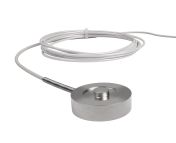
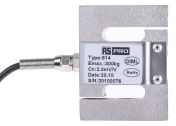
Load cells, also called load cell transducers, are vital components in most industrial weighing systems and processes. They essentially measure weight in the form of directional force, typically via a combination of spring elements and strain gauges. This force is then converted into an electrical output, providing accurate and reliable weight measurements for a wide range of applications.
Features and Benefits of Strain Gauges
Advantages of using strain gauges include the following:
- High Accuracy: Ensures dependable data for design validation, quality control, and safety compliance, reducing costly errors.
- Versatility: Suitable for diverse applications, from keypads and medical devices to heavy industrial equipment, making them a flexible choice for multiple industries.
- Easy Installation: Simple bonding with epoxy or adhesive saves time during setup and minimises installation costs.
- Integration Flexibility: Compatible with load cells, transducers, and monitoring systems, enabling seamless integration into existing processes and reducing downtime.
How to Choose the Right Strain Gauge Sensor
Before buying a strain gauge from RS New Zealand, consider the following:
- Type of Measurement Required: Decide whether you need the sensor to measure strain, force, torque, pressure, or weight.
- Material Compatibility: Ensure the gauge is suitable for the surface material (e.g., steel, composites, or plastics) to guarantee accurate bonding and readings.
- Gauge Factor: Check the sensitivity rating, as this determines how effectively the gauge converts strain into a measurable electrical signal.
- Size & Form Factor: Select the most appropriate shape and dimensions for your installation space and application needs.
- Output Requirements: Choose between analogue, digital, or wireless strain gauges depending on how you intend to process and monitor the data.
- Load Range & Capacity: Match the gauge’s capabilities with your application’s expected load levels for consistent performance.
- Installation & Calibration: Consider ease of installation, adhesive compatibility, and the need for ongoing calibration or maintenance.
- Budget & Performance Needs: Compare options based on accuracy, durability, advanced features, and overall strain gauge price to balance cost with performance.
Applications of Strain Gauges and Load Cells
Strain gauges and load cells are versatile tools used across multiple industries, including:
- Automotive, Marine & Aerospace Design: Measure structural stress and optimise safety in vehicles, ships, and aircraft.
- Construction: Used in bridges, weighbridges, and tunnels to monitor load, detect stress, and ensure long-term structural integrity.
- Industrial Engineering: Support manufacturing and production processes by providing precise force and weight measurements.
- Torque Measurement: Monitor motors, turbines, engines, fans, generators, wheels, and propellers for performance and safety testing.
- Experimental Stress Analysis: Widely used in scientific and research applications to study how materials and structures behave under load.
Shop High-Quality Strain Gauges Now
RS New Zealand offers a comprehensive range of strain gauges and load cells from trusted global brands including Siemens, TE Connectivity, and Honeywell. Whether you need a general-purpose strain gauge, a model with Bluetooth features, or a precision strain transducer, RS delivers competitive pricing and reliable local service.
Buy strain gauges from RS New Zealand today and get the quality and performance you can depend on. You can also explore our other measuring devices, including dial indicators, crocodile clips, and more. For more information on delivery options and fees, learn more by checking out our delivery information.
Popular Searches
Related links
- WIKA SPP-F2812 Series Strain Gauge Tension Measure
- WIKA SPP-F2301 Series Strain Gauge Tension Measure
- WIKA SPP-F2301 Series Button Strain Gauge Tension Measure
- WIKA SPP-F1821 Series Button Strain Gauge, Compression Measure
- WIKA SPP-F2822 Series Strain Gauge Tension Measure
- WIKA SPP-F2808 Series Strain Gauge Tension Measure
- WIKA SPP-F1222 Series Button Strain Gauge, Compression Measure
- WIKA SPP-F3203 Series Strain Gauge Compression, Tension Measure