Ribbon Cable
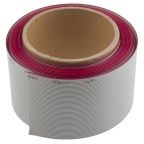
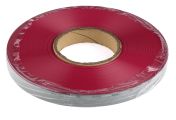
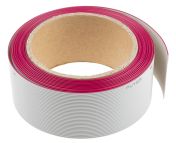
Ribbon Cable is a thin cable composed of multiple small-grade cables placed parallel to each other. With each core situated side by side, they form a wide flat cable resembling a piece of ribbon.
Ribbon cables work by transmitting multiple signals or data buses simultaneously. The parallel arrangement of each ribbon cable wire minimises signal timing differences, or "skew," and simplifies connector termination. The design of a flat wire makes it easy to route and fold in tight spaces without causing signal integrity issues, providing a reliable electrical path.
In New Zealand, ribbon cables are widely used in industrial and commercial settings. Their use is particularly common in electronics assembly for agricultural technology, telecommunications equipment, and industrial automation where a compact, organised, and reliable flat electrical connection is necessary.
Types of Ribbon Cable
Flat Ribbon Cable
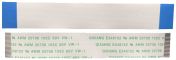
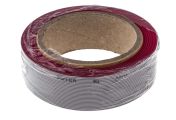
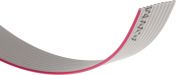
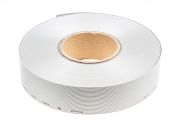
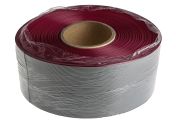
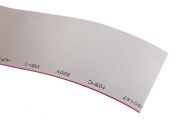
Flat ribbon cables, also known as multiplanar cables, are thin cables composed of multiple small-grade cables placed parallel to each other. This type of ribbon wire is mostly used in electronic systems that require multiple data buses to link internal peripherals, such as disk drives, to their controllers.
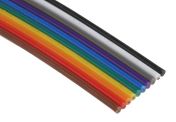
You can easily identify the flat cable as it resembles a piece of ribbon, often with colour-coded cores to differentiate them.
Round Ribbon Cable
Round ribbon cables consist of a group of wires laid side by side within a round outer jacket. They are identified by their round profile, with each wire often coloured differently for easy identification. Round ribbon cables are mainly used for external wiring in electronic equipment or appliances. They are more flexible, and their smaller form factor makes them useful if wiring is needed in a limited space.
Factors to Consider When Choosing the Right Ribbon Cable
Selecting the correct ribbon cable is important for ensuring signal integrity and a proper physical fit in your application. Consider these key factors when choosing the right flat cable for your project:
- Number of Conductors: The number of conductors must match the requirements of your application. Common options range from 4 to 64 conductors, with a 14-pin flat ribbon cable being a popular choice for connecting a specific number of data lines.
- Pitch and Connector Type: Pitch refers to the spacing between conductors. Choose a flat cable with a pitch that is compatible with your connectors and circuit boards. Common pitches are 0.050" (1.27mm), which is standard for many ribbon cable connectors.
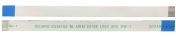
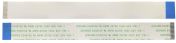
- Flexibility Requirements: Decide whether you need a standard ribbon cable or a more flexible type. Flex ribbon cables are designed for high-flex applications, such as those involving constant movement or tight bends, where a standard flat cable might wear out.
- Shielding: For environments with high electromagnetic interference (EMI), opt for a shielded ribbon cable. A shielded flat cable has a foil or braided layer to protect signals from external noise, ensuring reliable data transmission.
- Electrical Specifications: Check the ribbon cable's voltage and current ratings to ensure they meet your application's power and signal requirements. The insulation material and thickness also influence the maximum voltage rating.
- Material and Durability: The ribbon cable's material affects its durability and resistance to environmental factors like heat or chemicals. For rugged applications, choose a flat wire with robust insulation and a high temperature rating.
Industrial Applications of Ribbon Wire Cables
- Ribbon cables are essential for connecting internal components across a diverse range of industrial sectors in New Zealand, providing a reliable and organised solution for data and signal transmission.
- Computer and IT Systems: Flat ribbon cables are fundamental in computer systems for linking internal peripherals like hard drives, CD-ROMs, and controllers. Their flat design simplifies routing and organization within a standard computer chassis.
- Industrial Machinery: In manufacturing and industrial machinery across New Zealand, ribbon cable is used for connecting control panels and internal components. The flat form factor is highly efficient for running ribbon cable in confined spaces, simplifying assembly and maintenance.
- Automotive Electronics: Modern vehicles use ribbon cables in dashboards, engine control units, and infotainment systems. A flexible ribbon wire is perfect for accommodating the tight, intricate spaces behind control panels while providing a reliable connection.
- Aerospace and Defence: Ribbon cable wire is used in highly demanding aerospace and defence applications. The flat design of the cable is beneficial for weight and space savings, while specialised shielding protects against electromagnetic interference.
- Telecommunications: Ribbon cables are widely used in networking hardware and telecommunication devices. The ribbon wire helps keep multiple signal paths organised and simplifies connections between circuit boards inside equipment.
Shop Reliable Ribbon Cables at RS New Zealand
RS New Zealand is a trusted supplier and distributor of comprehensive ribbon cables and wiring solutions. We offer a wide range of flat ribbon cable and other cable types sourced from reputable brands like Molex, Wurth Elektronik, and 3M, ensuring reliable options for every wiring task.
Beyond ribbon cables, we also provide a wide array of other cables & wires, such as SATA cables, coaxial cables, and DIN cables, catering to all your industrial wiring and connectivity needs.
Explore our user-friendly online site for the full range of products and have them shipped to your door at your convenience. With our flexible delivery options, you can receive your products precisely when needed. For comprehensive details on delivery times and fees, please consult our Delivery page.








Popular Searches
Related links
- Alpha Wire Alpha Essentials Communication & Control Series Flat Ribbon Cable 1.27mm Pitch, 30m Length
- HARTING Flat Ribbon Cable 1.27mm Pitch, 30m Length
- HARTING Flat Ribbon Cable 1.27mm Pitch, 5m Length
- HARTING Flat Ribbon Cable 1.27mm Pitch, 10m Length
- RS PRO Flat Ribbon Cable 1.27mm Pitch, 30m Length
- RS PRO Flat Ribbon Cable 1.27mm Pitch, 30m Length
- RS PRO Flat Ribbon Cable 1.27mm Pitch, 5m Length
- L-Com TDC Series Flat Ribbon Cable RJ45 to RJ45