Calipers
Calipers are essential precision tools used widely across industrial, engineering, and scientific fields in New Zealand. Also known as measuring calipers, they are designed for high-accuracy dimensional measurements, including length, thickness, depth, and internal/external diameters.
In NZ, calipers are a staple in machine shops, laboratories, and manufacturing environments. They come in various types, featuring digital displays, dial indicators, or traditional vernier scales to suit different user preferences and accuracy requirements.
Types of Calipers
There are several distinct types of calipers, each offering unique advantages for different measurement scenarios.
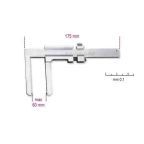
Vernier Caliper
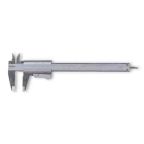
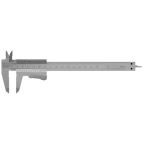
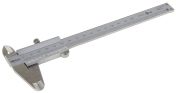
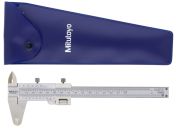
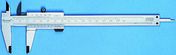
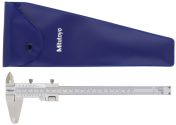
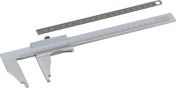
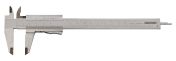
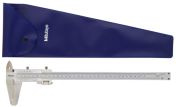
A vernier caliper, also known as a vernier gauge, uses a sliding vernier scale against a fixed main scale for precise readings. Measurements can be taken in millimetres or inches, typically accurate to 0.02 mm or 0.001 in. This type is ideal for internal and external diameters or round objects requiring high precision.
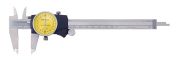
Dial Caliper
Dial calipers deliver the same accuracy as vernier types but with enhanced readability, thanks to an analogue dial display. This clear, intuitive interface reduces reading errors, making them ideal for fast-paced or repetitive tasks where quick, reliable measurements are essential.
Digital Caliper
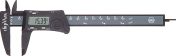
Digital calipers are modern measuring calipers that utilise linear encoders to determine internal, external, depth, and step distances. The measurements are then displayed on a clear digital screen, making them exceptionally simple to use and easy to read.
These electronic calipers often include features like instant unit conversion and zero-setting at any point, combining ease of use with precision—ideal for professional and industrial use across NZ.
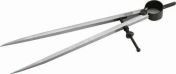
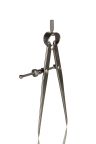
Spring Caliper
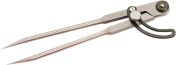
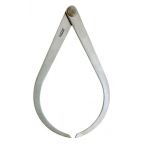
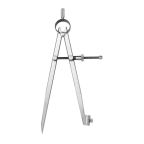
Spring calipers are used for transfer measurements, typically measuring internal or external diameters. To adjust the size of the measuring tips, the user turns an adjuster clockwise or anti-clockwise. They use an adjuster mechanism to set measurement tips and are often used in conjunction with a ruler or gauge.
Key Features of Measuring Calipers
Measuring calipers are designed with specific features that enhance their functionality, accuracy, and durability in professional environments.
- Robust Construction: Typically made from hardened stainless steel for durability and corrosion resistance in demanding industrial settings.
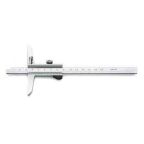
- Measurement Versatility: Many calipers offer the capability to measure inside and outside dimensions, step heights, and depths, providing a single tool for multiple measurement tasks.
- Display Options: Choose between vernier, dial, or digital interfaces for preferred readability.
- Unit Conversion: Digital calipers often allow for instant conversion between imperial (inches) and metric (millimetres) units, enhancing convenience and reducing potential calculation errors in international projects.
- Anti-Glare Finish: Some models feature chrome scales for better visibility under various lighting conditions.
- Fine Adjustment Mechanisms: Precision models include fine-adjustment wheels or screws.
- Locking Screw: Allows users to securely hold measurements for data recording or transfer.
Factors to Consider When Choosing Calipers
Choosing the right caliper for your specific needs in NZ is crucial for achieving accurate and efficient measurements. Consider the following factors:
- Determine Measurement Requirements: Identify the type and accuracy of measurements needed. For high precision, a digital vernier caliper or electronic calipers are often preferred.
- Choose the Appropriate Type:
- Vernier for durability and simplicity
- Digital for speed and clarity
- Dial for analogue readability
- Spring calipers for basic transfer tasks
- Consider Environmental Factors: Consider dust, humidity, or coolant exposure; choose IP-rated calipers where applicable.
- Check for Additional Features: Look for data output, hold functions, or special jaws.
- Range and Readability: Ensure the caliper suits the largest parts and is easy to read during repetitive tasks.
Applications of Calipers
Calipers are indispensable precision tools used across a broad spectrum of industries in NZ. Accurate dimensional measurements are critical in these sectors for quality assurance, product development, and maintenance.
- Manufacturing and Machining: In precision manufacturing, CNC machining, and fabrication, calipers are used daily to measure machined parts, verify tolerances, and ensure components meet design specifications. This includes measuring shaft diameters, bore sizes, and part thickness.
- Quality Control: Supports inspection of incoming materials and finished goods in high-precision sectors. This is particularly vital in automotive, aerospace, and medical device manufacturing.
- Research & Development: Essential for prototyping and material testing where fast, accurate measurements matter.
- Maintenance and Repair: Technicians use calipers to measure wear, clearances, or replacement parts.
- Jewellery and Watchmaking: Used for fine measurements in miniature components where minute tolerances are crucial.
- Woodworking and Construction: While often requiring less extreme precision, calipers are used to verify material dimensions or joinery fit.
Browse Our Caliper Selection Today
Need a new caliper or digital vernier caliper in NZ? RS New Zealand, a division of the RS Group, offers a diverse selection of precision measuring instruments from top brands such as BETA, Facom, and our own RS PRO. Our website makes it easy to browse and order other essential tools and test equipment, including digital pressure sensors, photoelectric sensor accessories, and bore gauges.
We also offer reliable delivery services across New Zealand. You can find all the details about our delivery options on our dedicated delivery page.