Micrometers
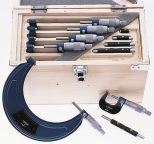
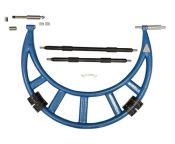
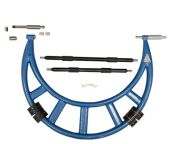
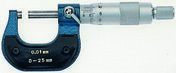
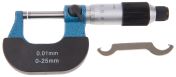
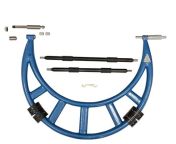
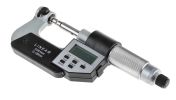
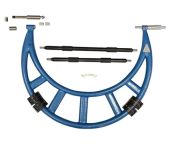
A micrometer, sometimes known as a micrometer screw gauge or a micro meter, is a precision instrument used to take exceptionally fine and accurate measurements. Available in both metric and imperial versions, its high degree of precision comes from a finely calibrated internal screw thread.
Micrometers are essential tools in mechanical engineering, machining, and other mechanical trades for the precise measurement of components. They typically feature a calliper-like frame that holds an object between a fixed anvil and a movable spindle. Learn how to calibrate and use micrometers correctly in our comprehensive micrometers guide.
Components of Micrometers
A standard micrometer consists of several precision parts that work together to achieve an accurate measurement. The main components are:
- Frame: The C-shaped body that holds all other components in alignment. It is designed to be rigid to ensure measurement accuracy.
- Anvil: The fixed, stationary measuring face that the object rests against.
- Spindle: The movable measuring face that travels toward the anvil. The distance between the anvil and the spindle is the measurement.
- Sleeve (or Barrel): The stationary cylindrical part marked with a linear scale, which forms the main part of the measurement reading.
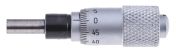
- Thimble: The rotating component that the user turns to move the spindle. It features a graduated scale for reading fractional measurements.
- Screw: The highly precise, calibrated screw thread located inside the barrel and thimble. It is the core of the micrometer's mechanism, translating the rotation of the thimble into precise linear movement of the spindle.
- Ratchet Stop: A device at the end of the thimble that slips at a pre-set torque. This ensures consistent pressure is applied for every measurement, improving repeatability.
- Lock Nut (or Spindle Lock): A knurled ring or lever that can be tightened to lock the spindle in place, allowing the user to read the measurement without the spindle moving.
How do Micrometers Work?
A micrometer measures small dimensions using a finely threaded screw. When you turn the thimble, the spindle moves toward the anvil until it touches the object. The ratchet stop ensures the right amount of pressure is applied. You then read the measurement from the scales on the sleeve and thimble.
Types of Micrometers
While the precise screw mechanism is common to all micrometers, they come in several specialised forms designed to measure different dimensions. The three most common types are:
External Micrometer
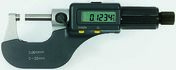
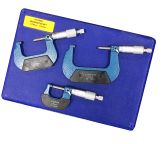
This is the most common and recognisable type of micrometer. It is used to measure external dimensions, such as the outside diameter of a shaft, the thickness of a block, or the width of a component.
Internal Micrometer
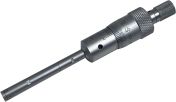
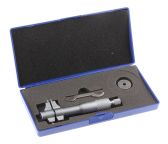
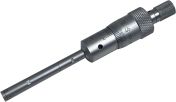
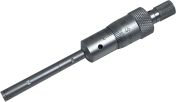
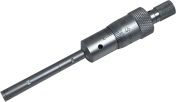
As its name suggests, the internal micrometer is designed to measure dimensions, such as the inside diameter of a bore, hole, or tube. They are available in several styles, including calliper-types for smaller holes and tubular or rod-type for larger diameters.
Depth Micrometer
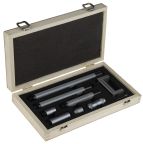
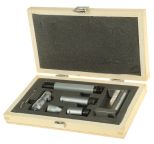
This type is used to measure the depth of holes, slots, steps, and recesses. It features a flat base that rests on the top surface of an object, while a thin measuring rod extends downwards to make contact with the bottom surface. Many models come with interchangeable rods to cover a wide range of depths.
Advantages of Micrometers
Micrometers are a preferred instrument in many engineering and machining applications due to several key advantages they hold over other measuring tools like callipers or rulers.
- High Accuracy and Precision: The primary advantage of micrometers is the ability to provide extremely accurate and precise measurements. The fine calibration of the internal screw allows for readings with a very high resolution.
- Repeatability and Consistency: The inclusion of a ratchet stop ensures that the same amount of pressure is applied for every measurement, regardless of the user. This feature eliminates user-dependent errors and leads to highly reliable and consistent results.
- Integrated Scales: The measuring scales are built directly into the sleeve and thimble of the tool. This means a micrometer is a self-contained instrument that does not require a separate ruler or other reference scale to take a measurement.
- Durability and Longevity: Built from high-quality materials with a simple, robust mechanical design, micrometers are extremely durable. With proper care, they are long-lasting tools that can provide accurate measurements for many years.
How to Choose the Right Micrometer in NZ
Selecting the right micrometer is essential for achieving accurate and repeatable results. The best tool for you will depend on the specific nature of your work.
Consider these key factors to find the perfect micrometer for your application.
- Measurement Type: Select an external or internal micrometer screw gauge based on your task requirements.
- Measurement Range and Precision: Choose a measurement range that suits your workpiece and a resolution that matches your precision needs.
- Digital vs. Mechanical (Analogue): Decide between digital micrometers for easy-to-read LCD displays and error reduction, or mechanical for classic, battery-free reliability.
- Ergonomics and Usability: Ensure the tool is well-balanced with a smooth action and clear scale; a ratchet stop is key for ensuring consistent, repeatable measurements.
- Budget and Quality: Balance your budget with quality. A reliable micrometer from a trusted brand is a long-term investment in accurate measurements.
Applications of Micrometers in NZ
The high precision of micrometers makes them indispensable tools across a wide range of technical and industrial fields in NZ where exact measurements and tight tolerances are critical for success.
- Mechanical Engineering and Machining: Used daily by machinists and engineers to measure shafts, bearings, and machined parts to ensure they are manufactured to precise specifications.
- Quality Control in Manufacturing: Essential for quality assurance inspectors to verify that finished components meet the required dimensional tolerances before they are approved for use.
- Electrical Engineering: For measuring the diameter of wires, the thickness of insulation, and the dimensions of small electronic components where precision is crucial.
- Specialised Industrial Tasks: Includes a wide range of uses, such as in the automotive industry for checking engine component tolerances or in aerospace for verifying the thickness of materials.
Ordering Micrometers from RS New Zealand
Achieve the highest precision in your work with the right micrometer from RS NZ. As a leading supplier, we stock a comprehensive range of micrometers from leading brands, including Mitutoyo, Facom, Starrett, and our own RS PRO range. Explore our full online catalogue to find the perfect micrometers, digital multimeters and clamp meters for all your precision measurement needs.
Ordering your precision instruments from RS is a simple and reliable process. Simply select the tools you require, add them to your online basket, and complete your transaction using our secure checkout. We offer various payment methods to accommodate your purchasing needs. For full details about our shipping options, delivery schedules, and service coverage within New Zealand, please visit our Delivery Information page.