Washers
Washers are thin discs placed between a fastener (such as a bolt or nut) and the surface being clamped. They act as spacers, vibration buffers or locking devices depending on their type and the assembly setting. Washers are used with screws, bolts and nuts to improve to improve load distribution, protect surfaces, reduce loosening, and support sealing in certain assemblies.
When selecting washers, teams typically focus on size, material, and function. Common sizes include m10 washers, also known as 10mm washers, which are widely used in mechanical and structural fastening applications. In moisture-exposed environments, stainless steel washers are often chosen for their corrosion resistance and used in outdoor or coastal applications.
How Do Washers Work?
Washers are small, flat rings placed between a fastener head or nut and the surface being fixed. Their main purpose is to spread the load more evenly and protect the surface from damage during tightening. Depending on the washer type, they can also act as spacers, vibration buffers, or locking devices to support joint performance.
Types of Washers
Plain / Flat Washers
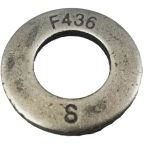
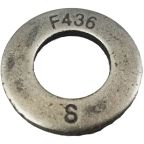
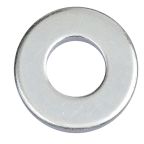
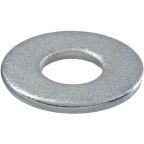
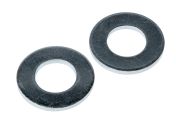
Flat washers are the most common washer type. They are used to spread load and protect surfaces. They are widely used with bolts, screws, and nuts in general fastening. Standard sizes include m10 washers and 10mm washers for metric assemblies.
Lock Washers
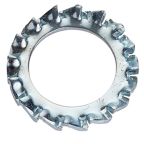
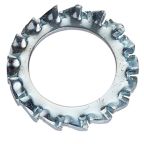
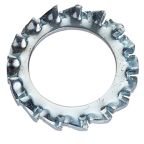
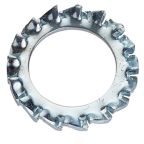
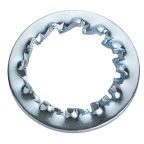
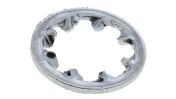
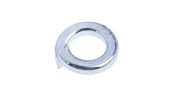
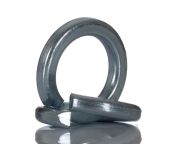
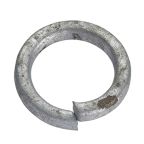
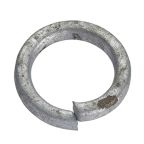
Lock washers are designed to reduce loosening caused by vibration or movement. They typically use a split or toothed design to increase friction under the nut or bolt head. They are common in machinery and equipment that experiences repeated motion.
Bonded Washers
Bonded washers combine a metal outer ring with a bonded rubber or elastomer inner seal. They are used to improve sealing around bolts and threaded fittings, helping prevent leaks in hydraulic, pneumatic, and fluid-handling applications.
Cup Washers
Cup washers have a dished profile that supports and centres fasteners while improving appearance and load distribution. They are often used with countersunk screws or decorative fixings where a neat finish is required.
Mudguard Washers
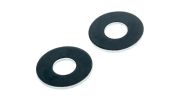
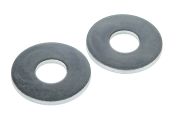
Mudguard washers have a larger outer diameter than standard flat washers. This improves load distribution across thin sheet materials, reducing the risk of pull-through. They are commonly used in automotive, sheet-metal, and light-structural assemblies.
Shoulder Washers
Shoulder washers are insulating washers with an extended sleeve. They are used to electrically isolate a fastener from a conductive surface or to prevent metal-to-metal contact. They are common in electronics, panel mounting, and enclosure builds.
Spring Washers
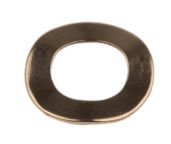
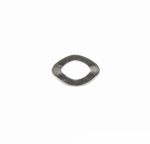
A spring washer provides tension under load, helping maintain clamping force when the joint experiences vibration or thermal expansion. It is typically used in mechanical fastening where maintaining preload is important.
Tap Washers
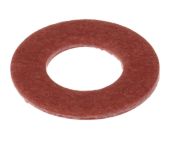
A tap washer is used in plumbing and tap assemblies to create a watertight seal. It is commonly made from rubber or similar materials and is used to prevent dripping or leakage in household and commercial fixtures. Sometimes they are paired with O-ring seals for a more leakproof seal.
How to Choose the Right Washer
Selecting the correct washer improves joint performance and reduces premature loosening or damage. Key factors include:
- Size: Match the washer inner diameter to the bolt or screw size. For example, m10 washers are selected for M10 fasteners. The outer diameter should suit the load area and material strength.
- Select Material for Environment: For dry indoor applications, standard steel washers are typically suitable. For outdoor, coastal, or washdown environments, stainless steel washers are preferred due to improved corrosion resistance. Where sealing is required, bonded options may be more appropriate.
- Shape: Choose the washer type based on function. Flat washers are general-purpose, mudguard washers that spread load over thin materials, and lock or spring designs support vibration resistance.
- Thickness: Thicker washers can offer better load distribution and resistance to deformation, particularly on softer materials or higher-torque joints.
- Consider Standards & Quality: Washers manufactured to recognised standards support consistent sizing and performance. This is important for repeatability in production and maintenance.
Applications of Washers
Washers are used across a wide range of industries and fastening scenarios, including:
- General Fastening & Assembly: Used with bolts and screws to distribute load and protect surfaces during tightening.
- Vibration-Sensitive Installations: Lock washers and spring washers help reduce loosening in machinery, motors, and equipment subject to movement.
- Sealing & Leak Prevention: Bonded washers and tap washer types are used where a seal is required to prevent leakage.
- Corrosion-Prone or Outdoor Environments: In New Zealand, stainless steel washers are commonly selected for outdoor fastenings, exposed equipment, and coastal installations where corrosion risk is higher.
- Automotive and sheet material fastening: Mudguard washers reduce pull-through risk on thin panels and improve stability.
The Main Distributor of Washers in New Zealand
RS is a trusted supplier and distributor of washers in New Zealand, offering dependable fastening components from leading brands such asRS PRO, Heicoand ABB. Our range includes other fasteners and fixings such as hex nuts, jubilee clips and machine screws as well.
If you require related fastening and assembly products, RS also supplies bolts, nuts, threaded components, and maintenance essentials through our online catalogue. RS New Zealand provides reliable delivery options to support both planned procurement and urgent maintenance requirements. For more information on shipping and service coverage, please refer to our delivery page.
Popular Searches
Related links
- RS PRO Stainless Steel Plain Internal Tooth Shakeproof Washer DIN 6798J
- RS PRO Stainless Steel Stainless Steel Crinkle Washers BS 4463
- RS PRO A2/304 Stainless Steel Stainless Steel Washers, DIN 9021
- RS PRO A2/304 Stainless Steel Washers, BS 4320B
- RS PRO A2/304 Stainless Steel Washers, DIN 9021
- RS PRO Stainless Steel Plain Washers, DIN 125A
- RS PRO Stainless Steel Plain Washers DIN 125A
- RS PRO Stainless Steel Stainless Steel Crinkle Washers BS 4463