Ammeters
Ammeters also known as ampere meters or amp meters, are instruments designed to measure the flow of electric current in a circuit, expressed in amperes (amps). They provide a precise reading of how much current is passing through a circuit at any given time, helping users monitor performance and identify irregularities.
Accurate current measurement is essential for diagnosing electrical faults, maintaining system efficiency, and ensuring safety in NZ. Ammeters make it possible to detect problems such as overloads, short circuits, or insufficient current flow before they cause damage to components or equipment.
Whether used in industrial systems, automotive applications, or household devices, ammeters play a vital role in testing, troubleshooting, and maintaining reliable electrical performance.
Types & Technologies of Ammeters
Ammeters come in several types and configurations, each designed to suit different current ranges, applications, and measurement methods.
Digital Ammeters
Digital ammeters display current readings on a digital screen, offering high precision and easy readability, even in low-light environments such as factories or industrial plants.
Many models can be programmed to trigger alarms or trip outputs when current levels exceed or fall below predefined limits. For portable troubleshooting, many handheld digital multimeters also include a highly accurate ammeter function,making them a versatile tool for technicians.
Analogue Ammeters
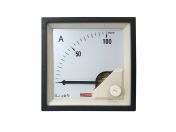
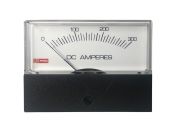
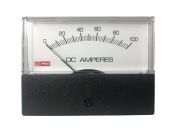
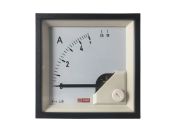
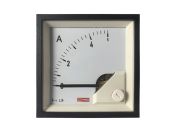
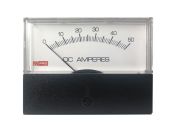
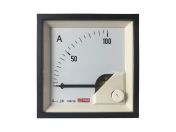
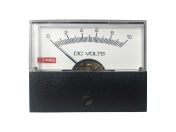
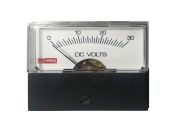
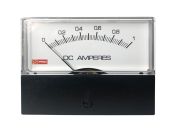
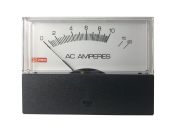
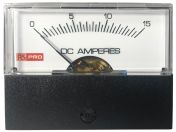
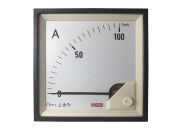
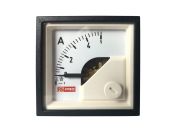
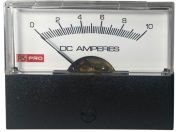
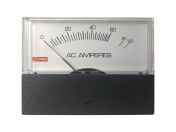
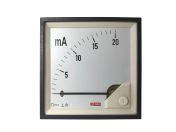
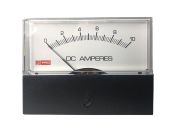
Analogue ammeters use a pointer and dial to show current levels. They’re valued for their ability to provide a quick visual sense of current fluctuations, making them useful for circuits with unstable or varying loads.
Common analogue ammeter mechanisms include:
- Moving Coil: Uses magnetic deflection, where a coil moves when current passes through it. This design uses spiral springs to provide the restoring force and delivers accurate DC current readings.
- Moving Magnet: Moving magnet amp meters operate similar to a moving coil meter, but with a stationary coil and a movable permanent magnet. These ammeters can handle higher current levels since their coils use thicker wire, making them more durable for heavy-duty applications.
- Moving Iron: Relies on a soft iron element that moves under the influence of an electromagnetic field generated by a current-carrying coil. Unlike moving coil types, moving iron ammeters can measure both AC and DC currents, offering greater versatility.
AC Ammeters
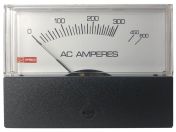
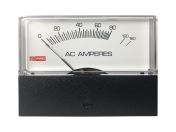
AC ammeters are designed to measure alternating current within a circuit. They are essential in systems powered by AC, such as industrial equipment, generators, and mains-powered devices, where current direction and magnitude vary continuously.
DC Ammeters
DC ammeters measure direct current, which flows consistently in one direction. They’re commonly used in automotive systems, solar power setups, and electronic devices to monitor steady current output and detect faults like overloads or voltage drops.
Scaled / CT-Input Ammeters
Scaled or CT-input (Current Transformer) ammeters are used to measure large currents indirectly. Instead of connecting directly to the circuit, they receive a reduced, proportional signal from a current transformer, allowing safe and accurate monitoring of high-current applications found in industrial power systems and distribution panels.
Factors to Consider When Choosing the Right Amp Meter
Current Type & Range
Determine whether you need to measure AC, DC, or both. Choose an ammeter that matches the current type and can handle the expected range without exceeding its rated capacity.
Display Type
Select between digital and analogue displays based on your preference and application. Digital displays offer precise numerical readings and are ideal for low-light or high-accuracy environments, while analogue dials provide at-a-glance indication of current fluctuations.
Accuracy
Check the amp meter’s accuracy class to ensure it meets your measurement needs. Applications that demand precise current monitoring, such as testing or calibration work, require a tighter accuracy tolerance compared to general monitoring.
Scaling / CT Compatibility
For high-current applications, choose ammeters that are compatible with current transformers (CTs). CT-input meters measure current indirectly and safely, scaling down large current values into readable outputs without overloading the meter.
Mounting, Panel Size & Cutout Dimensions
Confirm that the ammeter’s dimensions fit your panel layout or mounting enclosure. Proper alignment and secure fitting help maintain protection ratings and ensure long-term reliability.
Response Speed
Faster response times are essential for applications that involve fluctuating or transient loads. Choose a meter with a response speed suitable for detecting short-duration current variations.
Environmental Specifications
Consider the operating temperature, humidity, and ingress protection (IP) rating of the ammeter. Industrial or outdoor environments may require amp meters with reinforced casings and protection against dust, moisture, or vibration.
Safety & Insulation Ratings
Ensure the ammeter complies with relevant safety standards and insulation categories. These ratings define the meter’s ability to withstand electrical surges and protect users during installation and operation.
Applications of Ammeters
Ammeters are widely used across industries to measure, monitor, and maintain electrical current flow in various systems. Their accuracy and reliability make them essential for ensuring safe, efficient, and stable electrical performance.
Common applications include:
- Industrial Control Panels & Automation Systems: Used to monitor current flow in machinery and automation setups, helping engineers maintain stable operation and detect overloads or irregular current draw.
- Power Distribution & Monitoring: Installed in switchboards and distribution panels to track current across circuits, ensuring balanced load distribution and preventing potential system failures.
- Electrical Equipment Diagnostics & Maintenance: Technicians use ammeters to troubleshoot equipment, identify faulty components, and verify current draw during repairs or preventive maintenance.
- Process Control & Instrumentation: Integrated into control systems to provide continuous current feedback for process stability and performance monitoring in industrial plants.
- Load Testing & Power Quality Monitoring: Employed to measure electrical load during testing and commissioning phases, as well as to assess overall power quality and detect inefficiencies in energy usage.
How to Order Ammeters from RS New Zealand?
Find the right ammeter for your electrical measurement needs at RS NZ. As a leading supplier of test and measurement equipment, we stock a comprehensive range of analogue and digital ammeters from trusted brands like Socomec, HOBUT, and Sifam Tinsley. Explore our full online catalogue to find the perfect ammeters, digital counters, electrical meters for your applications.
Sourcing your test and measurement instruments from RS is a simple and reliable process. Simply select the products you require, add them to your basket, and finalise your order through our secure online checkout system. We offer a range of payment methods. For details regarding shipping, delivery lead times, and our service coverage in New Zealand, please consult our dedicated Delivery Information page.